CBD Oil vs Gummies: Which Is Right for You in 2026
If you’ve been shopping for CBD lately, you’ve probably noticed two formats dominate every shelf and storefront: oils and gummies. Both are popular. Both claim to work. But they’re not interchangeable — and choosing the wrong one can mean wasting money or getting disappointing results.
After years of trying both formats regularly, here’s what actually matters.
The Short Answer
CBD oil kicks in faster and gives you more control over your dose. CBD gummies taste better and are easier to take without thinking about it. Neither is universally “better” — it depends on what you’re taking CBD for, your lifestyle, and your personal preferences.
Onset Time: Where the Difference Really Shows
This is the part most people care about, and it’s where oils win without much competition.
CBD oil, when held under the tongue for 30–60 seconds before swallowing, absorbs through the sublingual membrane and into your bloodstream. You’re typically looking at 15–30 minutes before you feel anything. Some people notice effects in under 10 minutes with high-quality full-spectrum oils.
CBD gummies have to go through your digestive system first. After you chew and swallow, the CBD has to survive your stomach acid, get processed by your liver (first-pass metabolism), and then finally enter your bloodstream. That process takes 45 minutes to 2 hours — sometimes longer if you’ve just eaten a big meal.
If you’re taking CBD for something that requires quick relief — a sudden anxiety spike, an acute pain moment, a panic attack — oil is clearly the better choice. Gummies work fine if you’re dosing on a schedule and don’t need rapid effects.
The bioavailability catch
Here’s the part that confuses a lot of people: gummies might feel slower, but that doesn’t mean they deliver less CBD overall. The story is more complicated than “faster = better.”
- CBD oil (sublingual): 13–35% bioavailability — some of the oil gets absorbed under the tongue, the rest gets swallowed and processed differently
- CBD gummies (edible): 6–20% bioavailability — the first-pass effect through the liver reduces how much actually reaches your bloodstream
So oil not only kicks in faster, it also delivers a higher percentage of the CBD you’re paying for. Gummies have to compensate with higher dose-per-serving to hit the same effective levels — which is why you’ll often see gummies formulated with 25mg+ per piece while a 10mg oil serving can be surprisingly effective.
Dosing Precision: Control vs Convenience
Oils win on precision. Most droppers let you measure anywhere from 2.5mg to 50mg+ in increments as small as 1mg. If you’re trying to find your minimum effective dose — which you should be, for cost efficiency — oils make that process far easier.
Gummies win on convenience. Every gummy is a pre-measured dose. No droppers, no counting drops, no accidentally overdosing because you squeezed the bottle too hard. If you travel frequently or take CBD in public settings, gummies are just easier to manage without drawing attention.
There’s a practical reality here too: gummies taste like fruit or sugar, which sounds great until you’re trying to take CBD specifically for weight management or blood sugar concerns. A 25mg gummy delivers not just CBD but whatever sweetener and calories came with it.
What Are You Taking CBD For?
Your use case should drive the format decision more than anything else.
Best for anxiety (especially acute anxiety)
Oil, consistently. Anxiety often requires fast intervention. If you feel a panic attack coming on, waiting 90 minutes for a gummy to kick in isn’t realistic. Oils let you dose before anxiety peaks. For daily preventive use, oils are also preferable because you can adjust your dose upward in tiny increments to find the floor of what’s effective.
Best for sleep
Either works, depending on timing. If you take CBD 30–60 minutes before bed, oil is ideal — fast enough to align with your bedtime routine. If you’re the type who takes something at dinner and expects to feel it by bedtime, gummies can work fine. CBD for sleep is typically paired with CBN or melatonin anyway, and those combinations are widely available in gummy form.
Best for chronic pain or inflammation
Oil, most of the time. Consistent dosing matters more than rapid onset for chronic conditions, but bioavailability still matters. Pain management typically requires higher doses, and paying for gummies at higher doses gets expensive fast. Oils let you use less CBD per dose while achieving better absorption.
Best for general daily wellness
Gummies, mostly. If you’re taking CBD as part of a daily supplement routine and don’t have acute symptoms to manage, the convenience of gummies probably outweighs the onset time disadvantage. The consistency of taking the same pre-measured dose every morning is genuinely valuable for building a habit.
Full-Spectrum vs Isolate: Does It Matter in Which Format?
One thing worth clarifying: the oil-vs-gummies debate is separate from the full-spectrum-vs-isolate question. Both formats come in both types.
Full-spectrum CBD contains trace amounts of other cannabinoids, including up to 0.3% THC (in US products). The entourage effect — where multiple cannabinoids work together — is well-documented and genuinely meaningful. If you can tolerate trace THC, full-spectrum is typically the more effective choice in both oil and gummy formats.
Broad-spectrum is full-spectrum with THC removed. Good for drug-test concerns but you lose some entourage benefit.
CBD isolate is pure CBD. Less effective overall but the right choice if you must avoid all THC.
For oils specifically, full-spectrum is widely considered worth the trace THC because the sublingual bioavailability advantage means you’re getting meaningful entourage effect even at small doses. For gummies, the lower bioavailability makes the isolate vs full-spectrum distinction somewhat less impactful — you need more CBD either way.
Cost Comparison: What You’re Actually Paying For
Let’s run some real numbers.
A quality full-spectrum CBD oil (1000mg, 30ml bottle) runs about $0.06–$0.10 per mg of CBD. A bottle gives you roughly 30 servings at 33mg each.
A quality CBD gummy (25mg per gummy, 30-count bag) runs about $0.08–$0.15 per mg of CBD — and because of lower bioavailability, you’d realistically need to take more mg to achieve equivalent effects.
In practice: oils tend to be more cost-efficient per effective dose, gummies tend to be more convenient per dose. If you’re taking CBD daily for a chronic condition, oils will almost always be cheaper long-term. If you’re taking it occasionally or value the no-fuss experience, gummies are worth the premium.
One thing to watch: some cheaper gummies use CBD isolate instead of full-spectrum while charging full-spectrum prices. Check the certificate of analysis before buying.
How to Tell If Your CBD Is Actually Working
It sounds obvious, but a lot of people take CBD consistently for weeks without feeling anything and assume CBD “doesn’t work for them.” More often the problem is one of four things:
- Dose is too low. Most starting recommendations (10–20mg) are too conservative for many people, especially for pain or sleep. Try stepping up in 5mg increments over two weeks before giving up.
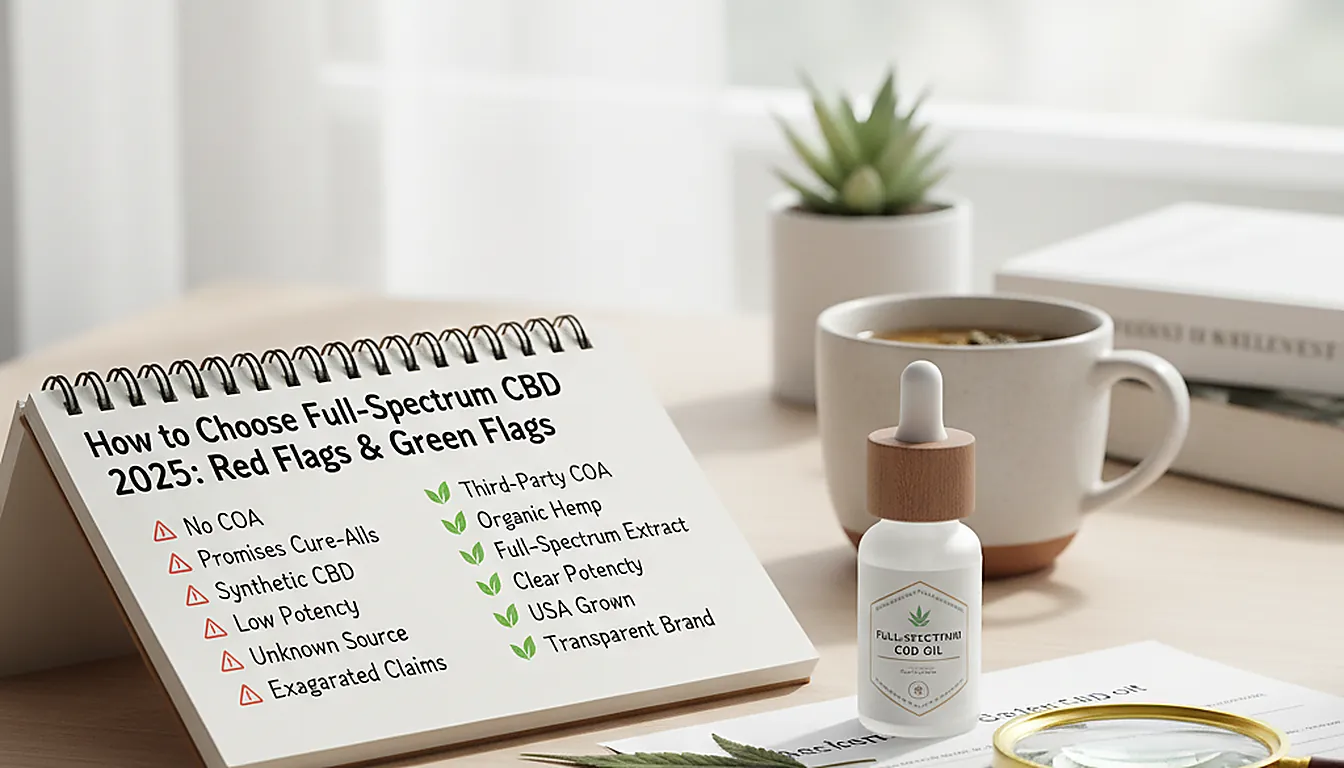
- Product quality is poor. The CBD market is barely regulated. Look for products with recent third-party COAs, US-grown hemp, and transparent manufacturing. Avoid anything with vague “hemp extract” labeling instead of specific mg counts.
- Timing is wrong. If you’re taking gummies for anxiety and waiting until you feel panicky, you’ve already waited too long. Oils let you dose ahead of time.
- Expectations are mismatched. CBD isn’t a miracle. It works best for anxiety, sleep, and pain in the context of an otherwise healthy routine. If you’re eating terrible food, sleeping 4 hours a night, and expecting CBD to fix everything, it won’t.
The Bottom Line
Neither format is a scam or obviously superior. Here’s the quick decision framework:
- Choose oil if: You need fast relief, you’re cost-conscious, you want precise dose control, you’re using CBD for anxiety or pain
- Choose gummies if: You struggle with consistency, you hate the taste of CBD oil, you travel often, you’re taking CBD casually for general wellness
Many experienced CBD users keep both on hand — oil for when they need it fast, gummies for daily maintenance. That’s actually the most sensible approach if your budget allows it.
And if you’re just starting out: don’t overthink it. Buy a small bottle of each, try them both for two weeks each, and see what actually works in your real life. The best CBD format is the one you’ll take consistently.